FAQs about Dog Training
- Editorial
- 28 Aug, 2026
FAQs about Dog Training:
How can I “break” him from chewing up my stuff when I’m gone?
How do I “break” my dog from barking outside all day or all night?
How do I stop him from chewing my child’s toys and stuffed animals?
Is my dog too old to train? The oldest dog we’ve had in class was 13 years old, and she was a star! When we grow in our understanding of how dogs think and learn, we realize just how much we can communicate with them. Understanding their body language and our role as their guide and protector in our human world makes it possible to help change undesirable behavior patterns at any age.
Is it okay if my dog sleeps in my bed? Does that mean he’s really spoiled? Your bed is a very desirable/prime sleeping spot. While teaching a young dog the rules of the house, I keep the bed off limits. He sleeps in a dog crate next to the bed. He learns he can come up on MY bed when he’s invited by me and gets off MY bed when I say so. The bed is an earned privilege, not a right.
I know my dog “knows” he’s been bad when I’m gone because he greets me at the door with a guilty look! How can I “break” him from chewing up my stuff when I’m gone? I love this question! Since we have about one second between your dog’s action and his understanding of the consequence – check out what he’s responding to when you come home with a look of horror on your face! It’s YOU! Management is the key here! Leave him in a puppy proof place. Limit his access to the whole house. A small “puppy proof” area such as a kitchen or laundry room works. Leave the radio on to create a bit of “white noise." And leave him several safe chew toys to help him occupy his time until you return. A good long walk before confinement will help to tire him out so that he is less inclined to entertain himself.
How do I “break” my dog from barking outside all day or all night? Management is the key here! Here is where your great owner skills come into play. How about a big exercise session before you leave for work and then keep her inside, in her safe and dog friendly environment - kitchen or laundry room with chew toys and interactive doggy toys. Keep the radio on so that there is a constant low level of noise. It makes those noises outside less noticeable. Come home for lunch to let your dog out and play with him for a few minutes. Or have a friend/neighbor come over and get him out for a while.
I think the term “break” really doesn’t apply to our current methods of dog training or our current philosophy with regard to other animal species used by us for a wealth of reasons or jobs. New training methods along with extensive research on animal learning and behavior, provides us with the opportunity to strengthen the bond with our animal companions without the need to use excessive force or coercion. A relationship based on mutual trust and teamwork will allow that bond to unfold into something quite special. It’s a privilege as well as a responsibility to care for an animal species. We are not born knowing how to do that. It’s up to us to educate ourselves and take on that responsibility.
How do I stop him from chewing my child’s toys and stuffed animals? Management is the key here! Close the door! Limit access to areas that are unsupervised. If he does get hold of something on the “not allowed” list, a loud clap/or noise might work to stop him in his tracks and then you can remove the object. Your job will be to redirect his attention to his own very desirable toy, and once he’s settled in on it say good boy! Also, find every opportunity to catch him doing the right thing. When he finds his own chew toy, all by himself and settles down for a good quite rest time, tell him what a good boy he is! You are reinforcing the behavior you want most! Now, that’s good management!
How do I stop him from begging at the table? That one is easy! Don’t feed him there! Either put him in his crate during dinner or teach him to go to his place and settle down while you are eating.
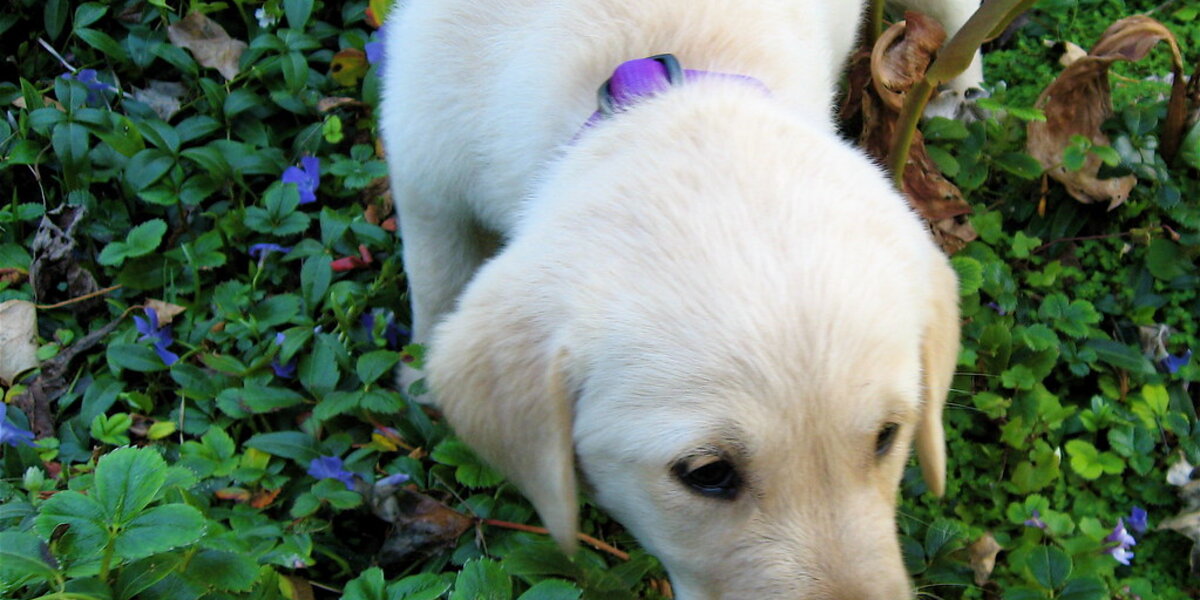
Is my new puppy too young to train? NO, start now!!! Your new puppy is like a fresh canvas for a painter. You can almost “paint” the puppy of your choice with early training and socialization. Check with your veterinarian about his vaccination schedule and enroll him in the earliest puppy class available. That early intervention/prevention will go a long way toward starting your puppy with a minimum of problems.
We used to think that a puppy shouldn’t be trained until he is at least six months old. That’s because the training techniques of the “old days” involved precisely given correction for being wrong. That old type of training was effective but it did not address building a solid and trusting relationship. Those techniques were based on performance dogs such as hunting and field dogs and competition obedience dogs.
The training that we incorporate now using positive reinforcement and teaching young puppies has evolved from years and years of research and dedication on the part of many specialized educators. From veterinarians, animal behavior specialists, physiologists, psychologists, and trainers in general, we have all begun to come together to help people train and live happily with the family dog. That’s where it all starts! Management, relationship building, teaching and training!
Total Teamwork Training, LLC - Laura Tyler:
Understanding the “Why” Behind Common Dog Behaviors
Before we can effectively address behaviors like chewing, barking, or begging, it helps to understand why dogs do what they do. Dogs are not being spiteful or stubborn—they are simply doing what works for them in the moment. Chewing relieves stress and boredom, barking is a natural form of communication, and begging is a learned behavior that gets rewarded (even accidentally). By shifting our perspective from “breaking” a dog to teaching a dog, we open the door to more humane and lasting solutions.
Modern dog training is rooted in the science of learning. We use positive reinforcement to show dogs what we want them to do, rather than punishing what we don’t. This approach builds confidence and strengthens the bond between you and your dog. It’s not about dominance or force—it’s about clear communication and teamwork.
How Positive Reinforcement Training Works
Positive reinforcement means rewarding the behaviors you like, so your dog is more likely to repeat them. The reward can be a treat, a toy, praise, or anything your dog finds valuable. Timing is critical: the reward must come immediately after the desired behavior (within about one second) so your dog makes the connection.
This method works for dogs of all ages, from puppies to seniors. It’s especially effective for teaching alternative behaviors—for example, teaching your dog to chew on a Kong instead of your shoe, or to lie quietly on a mat instead of barking at the window. Over time, with consistency, these new behaviors become habits.
Management: The First Step in Preventing Problem Behaviors
As mentioned in the FAQs above, management is often the key to success. Management means controlling your dog’s environment so that unwanted behaviors are less likely to happen in the first place. This includes using crates, baby gates, closed doors, and puppy-proof areas. It also means providing plenty of appropriate outlets for your dog’s energy and natural instincts.
Here are some practical management strategies:
- Chewing: Provide a variety of safe chew toys and rotate them to keep things interesting. Use a crate or exercise pen when you can’t supervise.
- Barking: Block visual access to triggers (e.g., close curtains or use window film) and provide white noise. Increase exercise and mental stimulation.
- Begging: Feed your dog before you eat, or give him a long-lasting chew or stuffed Kong in his crate or on his mat during meals.
- Counter surfing: Keep counters clear of food and teach a strong “off” or “place” cue.
Remember, management is not a substitute for training, but it prevents rehearsal of unwanted behaviors while you teach your dog what you do want.
The Role of Exercise and Mental Enrichment
Many problem behaviors stem from boredom and excess energy. A tired dog is a good dog! Daily physical exercise appropriate for your dog’s age and breed is essential. But mental exercise is just as important—sometimes more so. Dogs are intelligent animals that need to use their brains.
Incorporate activities like puzzle toys, scent games, trick training, and short training sessions throughout the day. Our Nose Work classes are a fantastic way to tire out your dog mentally while building confidence. Even 10–15 minutes of focused training can make a big difference in your dog’s overall behavior.
When to Seek Professional Help
While many common behavior issues can be improved with consistent training and management at home, some situations call for professional guidance. If your dog is showing signs of aggression, severe anxiety, or if you feel stuck and frustrated, don’t hesitate to reach out to a qualified trainer or behavior consultant. Early intervention is always best.
Our Dog Classes and Programs are designed to help you and your dog build a strong foundation of communication and trust. Whether you have a new puppy or an older dog with established habits, there is always room for improvement and growth.
“A relationship based on mutual trust and teamwork will allow that bond to unfold into something quite special.”
We are here to support you on that journey. With patience, consistency, and the right tools, you and your dog can overcome challenges and enjoy a harmonious life together.